Choosing Between a Media Platform With a Large Library and One With Better Curation
Comparing Library Size Against Curated Selection
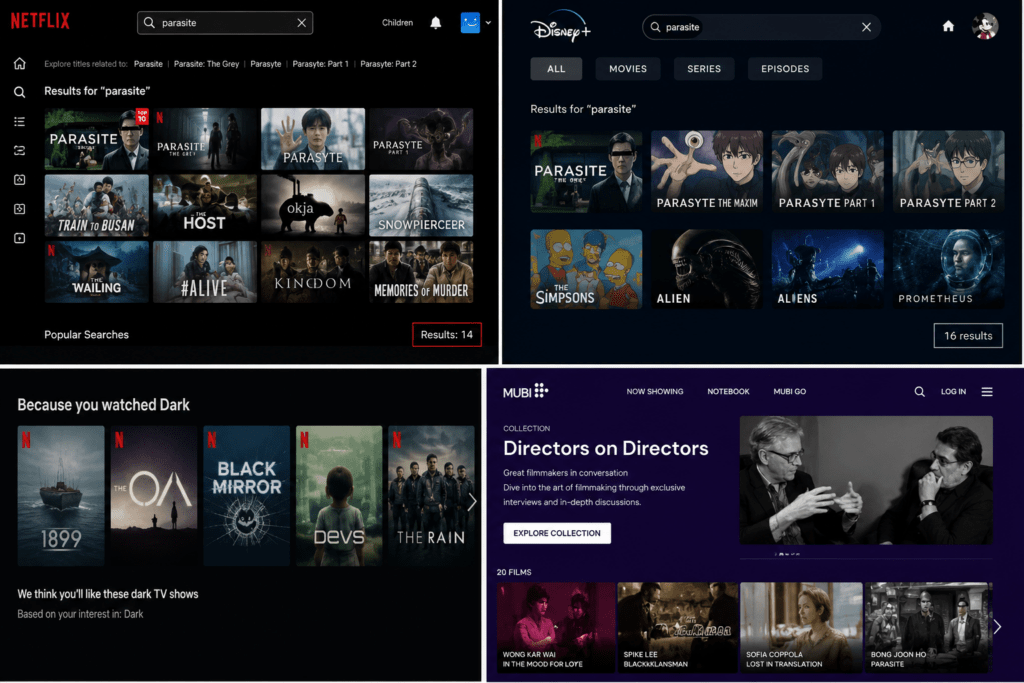
A streaming platform may advertise thousands of movies and programs, but a large catalog does not automatically make the subscription useful. If most titles do not match your interests, the platform can still leave you scrolling for a long time without finding anything worth watching.
A smaller platform can create the opposite experience. It may offer fewer choices but organize them through themed collections, personal recommendations, or selections made by film editors. This can make discovery easier, although it may not contain every popular, older, or niche title you want.
For viewers in Korea, the better choice depends on three factors: how many desired titles are actually available, how effectively the service helps you discover suitable content, and whether you use the platform often enough to justify keeping the subscription.
Count the Titles You Would Actually Watch
Do not judge an OTT service by its total advertised catalog. The more useful measurement is the number of titles that match your real viewing habits.
Start by creating a list of approximately 15 to 20 programs you genuinely want to watch. It should include more than one type of content so that the test reflects normal use. A Korean viewer’s list might include domestic dramas, entertainment programs, films, animation, documentaries, sports content, older series, and one or two less familiar titles.
Search for the exact titles on each platform. Record whether each title is included in the subscription, unavailable, offered only through separate rental or purchase, or scheduled to leave soon. Because OTT catalogs can differ by country and change over time, the checking date should also be recorded. Netflix, for example, states that its content selection varies by region and may change.
This produces a personal match rate:
Number of wanted titles available ÷ total titles on your list
A platform that carries 14 of your 20 selections may be more useful than a much larger service carrying only six. The test also prevents one highly promoted exclusive program from influencing the entire subscription decision.
Korean viewing patterns are not identical across platforms. KISDI has analyzed the use of major paid OTT services in Korea by factors including genre, country of production, original content, viewing time, and popular-title characteristics. This supports comparing platforms according to the content categories people actually consume rather than treating every catalog as interchangeable.
The same method works for households, but each person should create a short list. A service with a broad catalog can be valuable when family members have different tastes. A more focused service may offer better value to a single viewer who mainly watches one or two content categories.
| What to check | Platform A | Platform B |
|---|---|---|
| Essential titles available | X/10 | X/10 |
| Optional titles available | X/10 | X/10 |
| Included in subscription | Verify | Verify |
| Separate rental required | Verify | Verify |
| Date checked | Date | Date |
Do not use catalog size alone to declare a winner. First determine how much of the catalog is useful to you.
Understand How Each Platform Helps You Discover Content
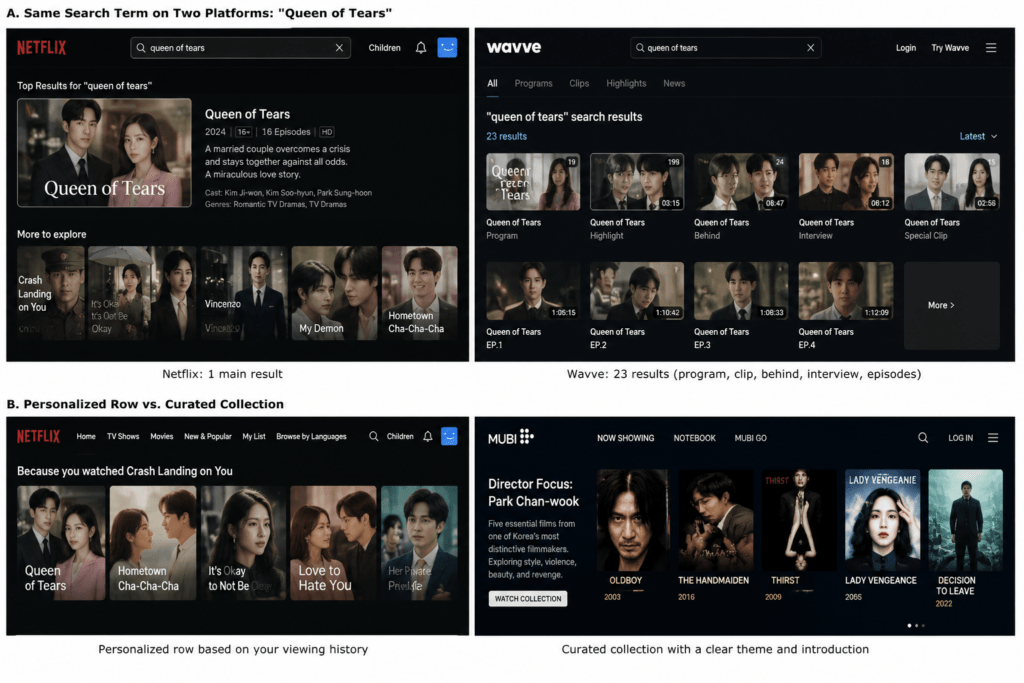
A large catalog and good curation are not necessarily opposites. Large platforms can provide highly personalized recommendations, while smaller services can also use viewing data and algorithms.
Netflix explains that its recommendation system considers interactions such as viewing history and ratings, the preferences of members with similar tastes, and information about each title, including genre, actors, and release year. It may also consider viewing time, preferred language, device, and how long content is watched.
This approach is useful when you want more content similar to what you already enjoy. However, it can become less effective when several people use the same profile or when your viewing history includes unrelated genres. Separate profiles can reduce this problem because Netflix maintains viewing activity and personalized settings at the profile level.
Watcha also emphasizes personalization. The company states that its services use hundreds of millions of user evaluations to recommend films, series, books, and other content, while its application describes recommendations based on users’ ratings and viewing records. citeturn418682search5turn418682search11
Human curation serves a different purpose. Instead of predicting the title most similar to your previous viewing, an editor may organize films around a director, period, country, social theme, festival, or filmmaking style. MUBI describes its curators as searching film festivals for new and original works and presents collections introduced by curators.
Neither method is automatically better.
Personalized recommendations are generally more useful when you want familiar genres, actors, formats, or viewing moods. Editorial curation is more useful when you want to discover unfamiliar works and understand why they were grouped together.
When checking a platform, examine how recommendations are presented. A useful service should do more than repeat popular titles. Look for meaningful differences among personalized rows, genre pages, themed collections, staff selections, and search results.
The best discovery system is the one that regularly produces a title you are willing to start—not the one that displays the largest number of thumbnails.
Test Discovery Before Keeping the Subscription
Promotional pages cannot show how well a platform will work for your account. Recommendation quality often changes after the service collects viewing, search, rating, and rejection signals.
Use a simple test during the first few viewing sessions. Open the service on the device you normally use and give yourself no more than ten minutes to find one suitable title. Record where you found it: direct search, personalized recommendation, trending list, genre page, editorial collection, or exclusive-content section.
Repeat the test on different days. One successful search is not enough because the homepage may temporarily feature a new release that already interests you.
During the test, consider four questions:
How quickly did you find a suitable title?
A large catalog has limited value when finding one acceptable program regularly takes 20 or 30 minutes.
How repetitive were the recommendations?
If the same small group of titles appears in several rows, the catalog may feel larger than the practical range being shown.
Did the service help you discover anything unexpected?
A useful recommendation does not always have to match previous viewing exactly. It can introduce a new genre or creator while still explaining why the title may fit your interests.
Did you actually watch the titles you saved?
A long watchlist can create the impression that the service has value even when most saved titles remain untouched. Netflix and similar platforms provide personal lists, but the important result is whether saved content is eventually watched.
After testing content fit and discovery quality, compare the current subscription conditions. Check the actual monthly price, advertisements, supported devices, simultaneous streams, downloads, subtitle options, and cancellation terms on the official service pages. These conditions can change and should not be assumed from an older comparison.
A broad platform is often practical for a household with several viewers or mixed viewing habits. A more focused or curator-led platform may be better for a solo viewer with specific tastes. Some users may also benefit from keeping one main subscription and temporarily adding another service only when it has a particular series or collection they want to watch.
The final decision should not be based on which platform claims to have the most content. Choose the service that passes three tests:
It carries enough titles you genuinely want, helps you find suitable content without excessive browsing, and is used often enough to justify the current cost.
Conclusion
A smaller catalog that consistently produces good choices can be more valuable than a huge library filled with irrelevant titles. At the same time, strong curation cannot compensate for a platform that lacks the programs you consider essential. The best platform is therefore the one with the largest useful catalog for your own viewing habits.